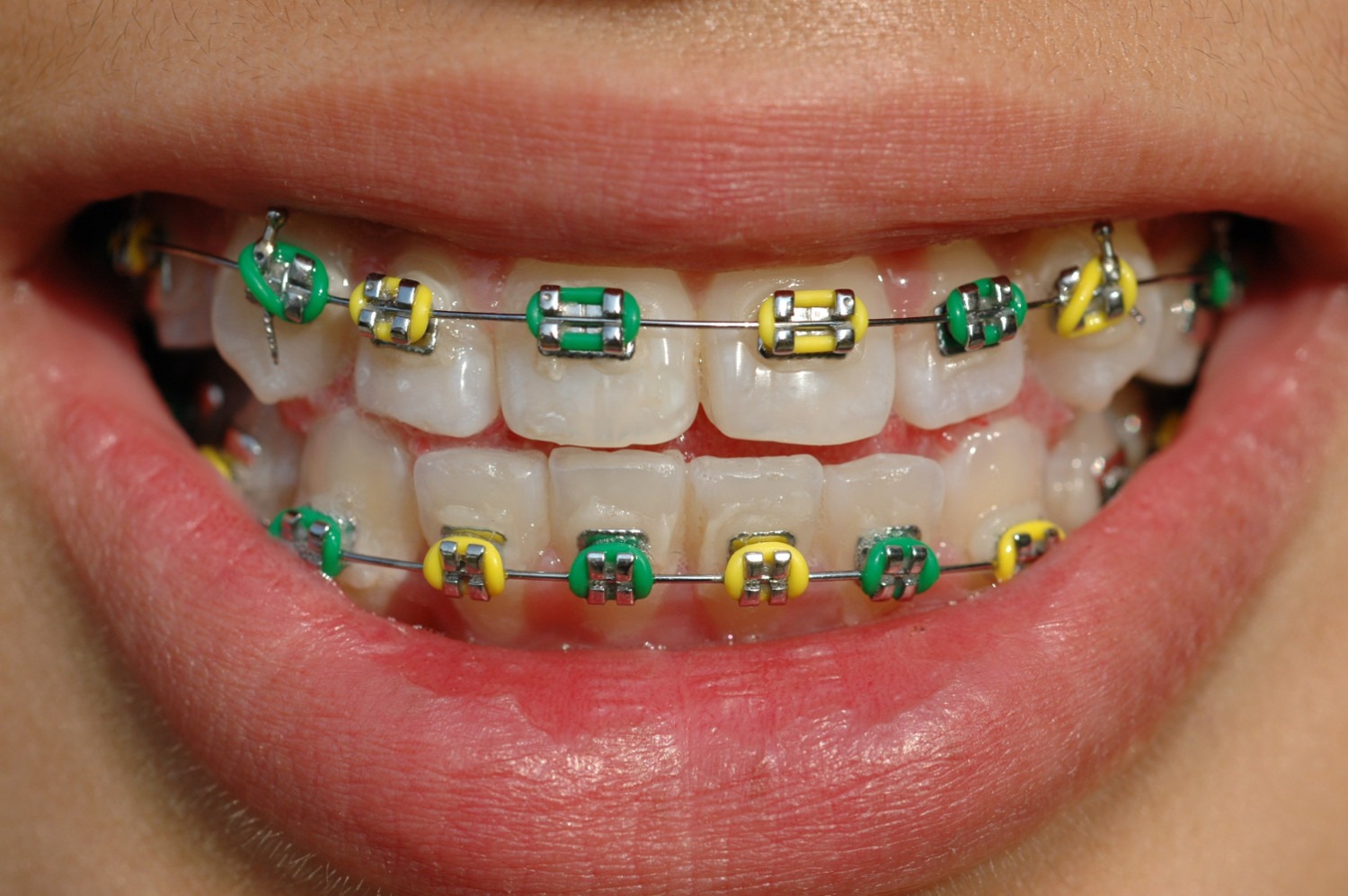
Rubber bands for braces, also called orthodontic elastics, are small stretchy bands that connect to specific brackets on your upper and lower teeth. They apply directional force to correct how your bite fits together. While braces straighten individual teeth, rubber bands help guide how the upper and lower teeth meet, giving you a smile that looks great and functions well.
So why do you need rubber bands with braces? Because brackets and wires alone can’t fix every bite issue. Your braces do the heavy lifting of straightening crooked or crowded teeth. But if your top and bottom teeth don’t meet correctly, you need that extra pulling force to bring everything together.
Think of it this way:
- Braces = straighten teeth within each arch
- Rubber bands = align how the upper and lower arches come together
At Rhoads Orthodontics, Dr. Stephanie Rhoads prescribes elastics as part of a personalized treatment plan when bite correction is needed. Families across Cranberry Township trust her to choose each set of bands based on your specific bite pattern, and the configuration may change throughout your treatment as your teeth shift into place.
How Do Rubber Bands Work with Braces?
Rubber bands hook onto small attachments on your upper and lower brackets, creating gentle, continuous pressure that guides your teeth and bite into the correct position. This steady force does what wires alone cannot, shifting your bite over weeks and months until your top and bottom teeth meet properly.
Here’s what daily wear looks like:
- Hook placement. Dr. Rhoads shows you exactly which brackets the bands attach to.
- Daily wear. You’ll wear elastics as instructed, often 20 to 22 hours a day, removing them only to eat, brush, and floss.
- Frequent replacement. Most patients swap in fresh bands three to four times per day, because rubber loses its stretch as it warms up in your mouth.
- Check-ins. At each visit, your specialist may adjust the size, strength, or configuration of your bands based on how your bite is responding.
The direction of the pull matters just as much as the force. Bands can run front-to-back, side-to-side, or even crisscross between arches, depending on what your bite needs. That’s why following your orthodontic specialist’s instructions exactly is so important. Wearing them on the wrong hooks, or skipping hours of wear, can slow your progress or shift your teeth in the wrong direction.
Consistency really is the secret. Patients who wear their bands as directed tend to finish treatment faster and with better results.
Benefits of Wearing Rubber Bands
When you wear your elastics consistently, the payoff shows up in both how your smile looks and how it works. Here’s what rubber bands can do for you:
- Correct bite issues including overbite, underbite, crossbite, and open bite
- Support efficient treatment by helping teeth and bite relationships improve together
- Improve chewing function so eating becomes easier and more comfortable
- Enhance speech clarity by aligning the teeth that help form certain sounds
- Create a stable result that’s less likely to relapse after braces come off
- Improve bite balance by helping the upper and lower teeth meet more evenly
- Reduce wear on teeth by ensuring upper and lower teeth meet correctly
A great smile is a team effort, and elastics are one of the most important contributions you make as the patient. Your orthodontic specialist places the brackets and wires, but the bands only work when you wear them. That partnership is what produces beautiful, lasting results.
Skip them, and you may end up with straight teeth that still don’t fit together correctly. Wear them, and you give yourself the best chance of finishing treatment on schedule with a bite you can rely on for life.
Types of Rubber Bands: Comparing Your Options
Orthodontic elastics come in several types, each designed for a specific bite correction. Dr. Rhoads selects the type, size, and force based on what your bite specifically needs. Here’s a quick comparison of the most common configurations:
| Elastic Type | Purpose | Configuration |
|---|---|---|
| Class I | Close gaps between teeth on the same arch | Runs front-to-back along the upper OR lower teeth |
| Class II | Correct an overjet or Class II bite relationship | Often connects upper canine to lower molar |
| Class III | Correct an underbite or Class III bite relationship | Often connects lower canine to upper molar |
| Vertical | Close an open bite where teeth don’t meet | Runs up-and-down between specific upper and lower teeth |
| Cross or criss-cross | Correct a crossbite | Runs diagonally across the bite from inside to outside |
Bands also come in different diameters and strengths, often named after wildlife to make tracking easier. A smaller, lighter band may be used early on, while a heavier band might come later as your teeth become more mobile.
Your bag of elastics may change throughout treatment. Don’t be surprised if Dr. Rhoads switches you to a new configuration at a check-up visit. That’s a good sign your bite is responding and treatment is progressing.
The bottom line: every band has a job. Wearing the right ones in the right spots is what brings your bite home.

Cost Factors: Are Rubber Bands an Extra Expense?
Rubber bands are typically included in your overall braces treatment at Rhoads Orthodontics, with no separate fee for the elastics themselves. You’ll receive new bags of bands at visits as part of your care. The real cost of elastics shows up in a different way, through what happens when you don’t wear them.
Inconsistent wear can:
- Extend your treatment by months, meaning more visits and more time in braces
- Require additional appliances if the bite doesn’t respond to elastics alone
- Lead to results that don’t hold up, which may need touch-up treatment later
- Increase indirect costs like time off work or school for extra visits
In other words, the bands are usually part of treatment, but skipping them can make treatment longer and more frustrating.
Dr. Rhoads believes in transparent pricing for every family in Cranberry Township and beyond. During your free consult, you’ll receive a clear breakdown of your full treatment cost, including materials, visits, and follow-up care. There are no hidden surprises and no fine print to decode later. Rhoads Orthodontics also offers flexible financing and payment plans designed to fit a range of budgets, so cost doesn’t have to stand between you and a confident smile. The team is happy to walk through your options at your first visit, answer questions about monthly payments, and help you understand what your insurance may cover so you can plan with confidence.
Who Needs Rubber Bands with Braces?
Not every braces patient needs elastics. Your orthodontic specialist decides based on what your bite looks like at the start of treatment and how your teeth respond as braces do their work. You may be a candidate for rubber bands if you have:
- An overbite, where upper teeth sit too far in front of lower teeth
- An underbite, where lower teeth extend past upper teeth
- A crossbite, where some upper teeth fit behind lower teeth
- An open bite, where upper and lower teeth don’t touch when you bite down
- Midline issues, where the center of your upper and lower teeth don’t line up
- Spacing concerns that need directional force to close
Both teens and adults across Cranberry Township, Mars, Zelienople, and Wexford can be prescribed elastics. Bite issues don’t go away on their own with age, and the same basic treatment principles apply whether you’re 13 or 43. As an orthodontic specialist, Dr. Rhoads has the advanced training to identify which bite patterns benefit from elastic therapy and to design a plan that fits your goals.
If you’re starting braces, your free consult will include a full bite analysis so you’ll know upfront whether elastics will be part of your treatment.
Braces Treatment Near Cranberry Township, Mars, Zelienople, and Wexford
Rubber bands are often part of comprehensive braces treatment for patients throughout the communities we serve. Whether you are looking for braces in Cranberry Township, Mars braces, or Zelienople braces, Dr. Rhoads will explain each step clearly so you know what your appliances are doing and why they matter.
Patients comparing treatment options can also learn more about clear braces, Invisalign, and other orthodontic treatments. For families exploring care at different ages, our orthodontics for all ages page explains treatment options for children, teens, and adults.

Frequently Asked Questions
How long do I wear rubber bands each day?
Most patients wear elastics 20 to 22 hours per day, every day. That means they stay in while you sleep and only come out for eating, brushing, and flossing. The more consistently you wear them, the faster your bite corrects. Even a few hours off track each day can slow your results significantly.
What happens if I don’t wear my rubber bands?
Skipping your elastics is one of the main reasons treatment runs long. Without that directional force, your bite won’t shift, even if your teeth keep straightening. You may end up needing extra months in braces, additional appliances, or revision treatment. Taking breaks and restarting can also make your teeth sore each time, because they’re being asked to move all over again.
How often should I change my rubber bands?
Plan to swap in fresh elastics three to four times a day, or any time a band breaks. Rubber loses its stretch quickly once it’s in your warm mouth, and an old band can’t apply the right amount of force. A good habit is to change them after every meal when you brush.
Can I eat with rubber bands on my braces?
You’ll take your elastics off to eat, then put on a fresh pair afterward. Eating with bands in place is uncomfortable and can stretch them out, reducing their effectiveness. Keep a small bag of replacements in your backpack, purse, or car so you’re never caught without them.
How long until rubber bands fix my bite?
Most bite corrections take several months of consistent wear, though every case is different. Some patients see noticeable changes within a few weeks, while complex corrections may take longer. Dr. Rhoads will track your progress at each visit and adjust your elastics as needed.
Do rubber bands hurt when I first start?
You may feel some soreness during the first few days, similar to how braces felt when they were first placed. This is your teeth and jaw responding to the new pressure, and it usually fades within a week. Sticking with consistent wear actually reduces discomfort, because your teeth adjust faster when the force stays steady.
Ready to learn more about your smile journey? Dr. Stephanie Rhoads and the team at Rhoads Orthodontics would love to meet you. Schedule a free consult and find out exactly what your personalized treatment plan looks like. Our family can’t wait to meet yours.